
Supply Path Optimization for Publishers: A Practical Guide
Supply path optimization for publishers refers to an understanding of the route through which the advertising inventory of the publisher reaches the advertiser within the programmatic ecosystem. In other words, it means looking into the connections that exist among SSPs, ad exchanges, resellers and DSPs to see how effectively and transparently is the inventory supplied to the buyers.
Though supply path optimization (SPO) is generally considered as the domain of the advertisers and DSPs, this concept is significant for publishers as well. There are many ways in which the availability of the inventory can have an effect on the access of the buyers to the inventory, the participation of the inventory in auctions, the transparency of the supply chain and the monetization environment as a whole.
What Is Supply Path Optimization for Publishers?
The term supply path optimization (SPO) is defined as the process of selecting routes for advertisers in order to get access to digital advertising inventory. This concept is widely used by advertisers and DSPs in order to select the preferred partners for supply and avoid the unnecessary intermediaries and bid request duplications.
From the publisher’s perspective, supply path optimization is viewed from the opposite side of the transaction.
For instance, an ad impression may be made available by a publisher to several SSPs. These SSPs will then make the same impression available to the same set of buyers. The DSP may choose to optimize one path over the other.
This implies that the number of SSP integrations is not necessarily an indicator of more competition or improved monetization.
Why is Supply Path Optimization Important for Publishers?
Publishers need to know what SPO is because buyer decisions will ultimately determine the way their inventory is going to get its demands met. Buyers will judge supply paths on aspects such as transparency, inventory quality, and other considerations.
These considerations include:
1. Duplicate Bid Requests
The use of several SSPs to offer the same impression to the same set of buyers creates duplicate bid requests for a DSP to process.
2. Direct and Reseller Relationships
The inventory of publishers could also be portrayed via direct SSP relationships and legitimate reseller relationships.
The buyer can judge whether the seller maintains a direct relationship with the publisher or is selling the inventory via an intermediary. It becomes essential for the publisher to know the partners that are authorized to sell their inventory.
3. Supply Chain Transparency
It is essential for the buyer to know the participants in an advertising transaction. Misleading or out-of-date data of sellers makes it difficult for them to identify the structure of supply chain.
It is essential for the publishers to keep the seller declarations correct and update themselves about the entities authorized to represent their inventory.
4. Demand Partners Relationships
Every SSP or reseller doesn’t provide the same level of access to buyers. Some can have good demand relationships, whereas others can provide redundant routes and incremental demand.
It is essential for the publishers to analyze their demand partners’ relationships.

How Supply Path Optimization Works
Supply path optimization typically includes an analysis of the available advertising inventory supply path choices, with an aim of choosing the most suitable combination of efficiency, transparency, and quality of the inventory.
From the publisher’s point of view, the comprehension of the procedure includes an examination of the supply chain of the inventory.
The sequence below explains the connection between the steps:
- The publisher offers inventory: An ad impression occurs when the user views a website page or the application loads.
- The supply platforms accept the impression: The ad server of the publisher and SSPs that are integrated with it process the inventory according to the existing setting.
- The inventory is available for potential buyers: Supply partners and exchanges provide access to the impressions that meet certain criteria to the DSPs.
- The buyer analyzes the available supply path: DSPs evaluate the supply partners and requests for the impressions according to their own policies.
- The auction accepts the winner of the bid: Available for bidding impressions participate in the competition under the established rules, and the winning ad gets displayed.
The publisher does not have control over the process of the evaluation of the DSP. But understanding the process allows the publisher to analyze its own supply partners and advertising connections.
A Supply Path Optimization Example for Publishers
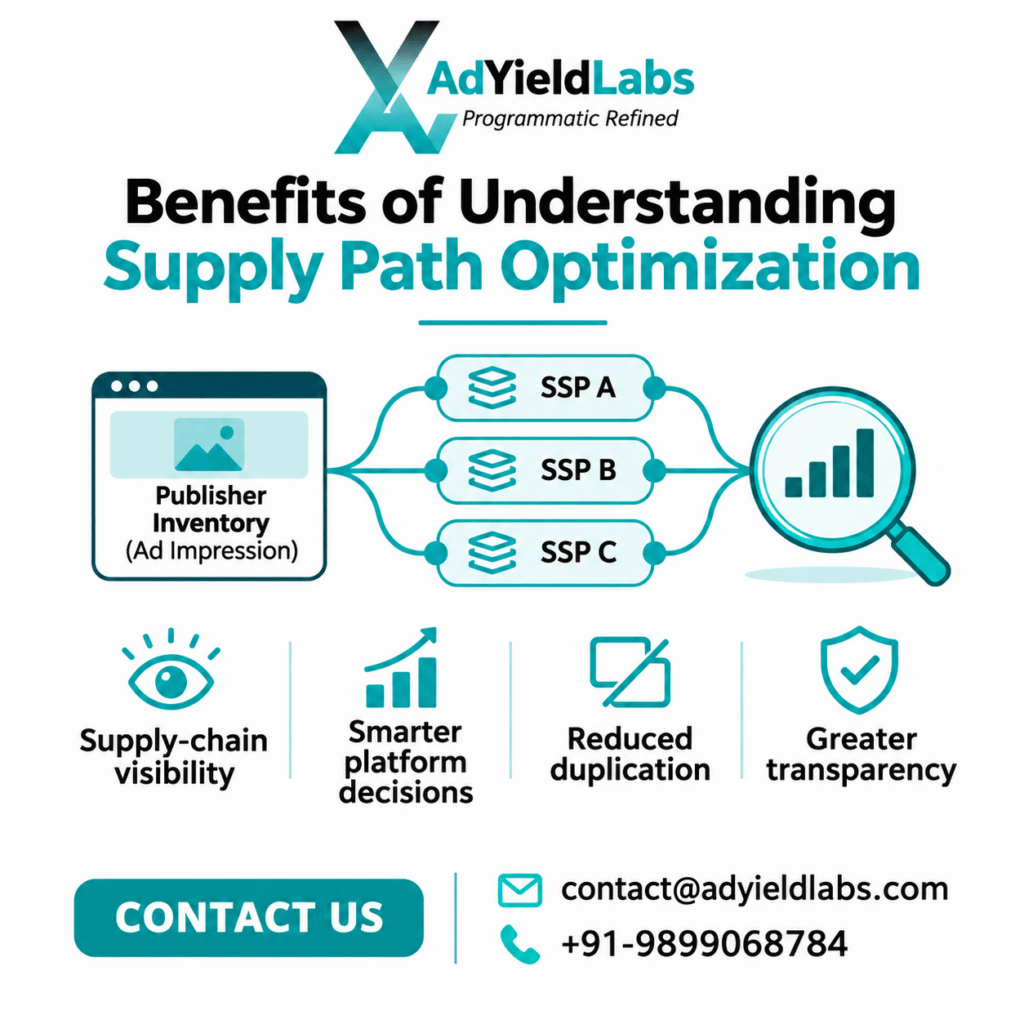
Imagine a digital publisher that uses three different Supply-Side Platforms (SSPs) to sell its website inventory.
An advertising impression gets created when a visitor views a particular page. All three SSPs can potentially have access to that impression due to the publisher’s ad configuration. Since the platforms have connections to the same demand sources, the same impression might get exposed to the same buyer via different supply paths.
For instance:
Publisher’s Website
An advertising impression gets created.
Supply Path 1: Publisher → SSP A → DSP → Advertiser
Supply Path 2: Publisher → SSP B → DSP → Advertiser
Supply Path 3: Publisher → SSP C → DSP → Advertiser
Here, the inventory of the publisher is accessible through three different SSPs, but none of the paths might offer unique demand. There could be a case where a DSP might have an opportunity to bid on the same impression via multiple SSPs.
This is why evaluating supply path can be quite critical. The publisher needs to figure out if there is anything unique about the demand offered by each SSP.
For example, SSP A may have access to certain buyers who are not accessible via the other two platforms, but SSP B and SSP C may have a very similar demand. Nevertheless, the publisher should check this with the help of the data on auctions and reports; there is no need to assume that having less SSPs will mean more success.
The goal here is not just to minimize the number of SSPs, but to know the value and transparency of each channel of supply and be able to make the right decision concerning the programmatic configuration.
Critical: The ultimate decision regarding supply routes is made by DSP or buyer. Publishers may increase the transparency of their supply chain and analyze their relationship with the SSPs, but they cannot control the choice of the DSP.
What Should Publishers Review When Evaluating Supply Paths?
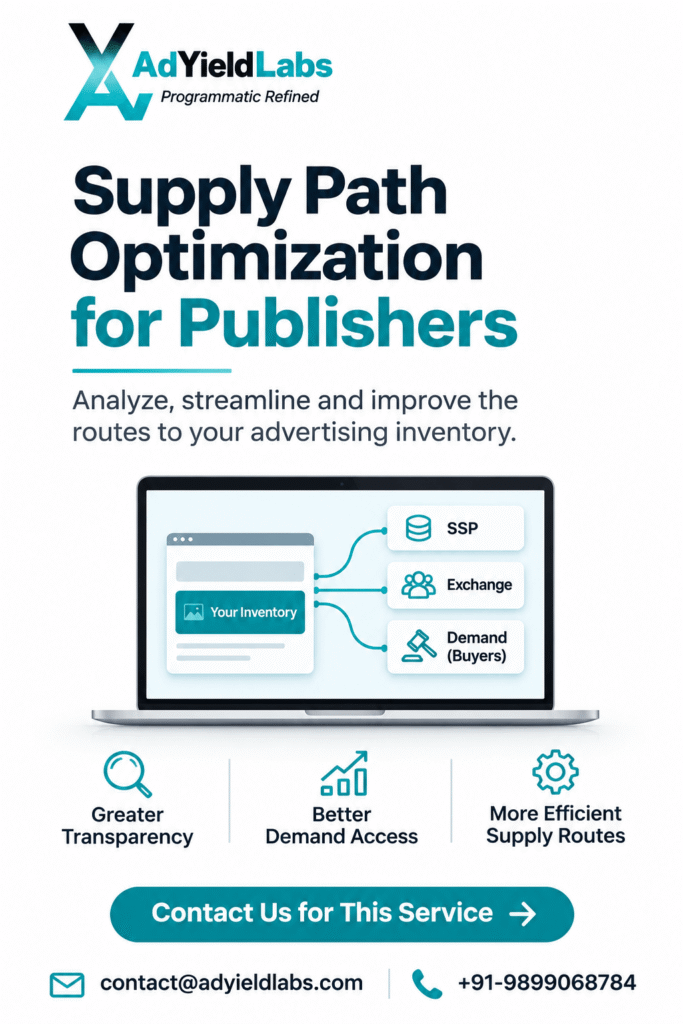
There are various elements in the current advertisement network of a publisher, which can be reviewed by the publisher in order to analyze the way its inventory gets to the buyer.
Relationships with SSPs and Exchanges
Check out the list of supply platforms associated with your advertising ecosystem. Find out what kind of relationship each of them has, what demand relationships it can offer you and whether there are any overlapping integrations.
Ads.txt and sellers.json Files
The file ads.txt contains the list of authorized sellers of the publisher’s inventory. The sellers.json files include the information about the participants of the selling process.
Publishers need to make sure that their sellers’ declarations are correct and that their relationships are correctly described.
Supply Chain Object
This is a set of data concerning the entities taking part in selling an advertising impression. It is also called schain.
Header Bidding and Auction Settings
Header bidding might allow multiple demand partners access to the same inventory at once. The publisher needs to be familiar with the interactions between the integrations, any duplicate demand connections that may be happening, and any overly complicated auction settings.
Auction and Reporting Information
Reporting will give the publisher information to compare the activity of the SSP, bid requests, bids received, timeouts, impressions and revenue contribution.
The goal is to uncover trends worth looking into, not to judge who is making the most requests.
Benefits of Understanding Supply Path Optimization
Understanding the supply chain would be beneficial for publishers to make the right decisions regarding their programmatic advertising partnerships.
These could include:
- Increased supply chain visibility through improved knowledge of the parties that participate in the process of inventory sales.
- More thoughtful decisions about which platforms to use for their access to demand.
- Decreased complexity through identification of duplicate supply chain integrations.
- Increased transparency by providing better information about the authorized sellers and transaction flow.
- Better operations through improved ability to analyze auctions and advertising performance.
All of this depends on how established is the current publisher’s infrastructure, buyer partnerships, quality and quantity of inventory and data. Supply path optimization does not necessarily lead to higher CPMs or increased revenue from advertising.
How AdYield Labs Helps Publishers Understand Their Supply Paths
Supply path optimization involves more than just the counting of how many SSPs are tied up with your website. The publisher needs to think about how the current set of infrastructure can work with each other.
At AdYield Labs, we work with publishers and digital media organizations to analyze the programmatic infrastructure they currently have in place. Our process starts with the analysis of how the current setup works and what may need some attention based on the details available.
This includes the following aspects:
- The current list of SSPs and exchanges you work with.
- Direct and reseller supply declarations.
- The details of ads.txt and sellers.json.
- Implementation of SupplyChain Object.
- Your current header bidding setup and demands.
- Auction reports and performance data.
We do this without replacing the whole infrastructure stack of your existing system for advertisements.
For more detailed analysis, check out our services related to Supply Path Optimization and Supply Side Platforms.
Need help understanding your publisher supply paths?
Contact AdYield Labs to discuss your existing advertising environment and the areas you want to evaluate.
Email: contact@adyieldlabs.com
Phone: +91-9899068784
FAQs
What does supply path optimization mean for publishers?
Supply path optimization means knowing the ways by which the advertising inventory of a publisher is available to the buyers using SSPs, exchanges, resellers, and other suppliers of ad inventory.
Can publishers do supply path optimization on their own?
Publishers can look at the SSP connections, the ads.txt files, sellers.json file, Supply Chain object, and auction data. Additional evaluations might require the use of supply chain analytics and other information.
What is an example of supply path optimization for publishers?
Let us assume that a publisher has three SSPs that provide the same ad inventory for the same buyer base. In this case, the publisher can analyze the bid-request data, buyer access, and revenue contribution of the connections to see if all three connections are required.
Is it true that supply path optimization implies the usage of less SSPs?
Not necessarily. While reducing the number of SSPs might seem simpler for publishers, it can imply losing demand partners. Therefore, a publisher must assess the role of each SSP when making decisions regarding optimization.
What is the difference between SPO and DPO?
Supply Path Optimization is usually associated with the evaluation of advertisers and DSPs of paths used to purchase publisher’s inventory. In contrast, DPO describes the publisher-side evaluation of demand sources and paths used for monetizing the inventory.
How do ads.txt and sellers.json help achieve supply path transparency?
In the ads.txt file, the sellers authorized to sell the publisher’s inventory are identified, whereas sellers.json contains details of the entities participating in the selling process. Thus, these two files assist buyers in understanding the supply chain better.